
The approach
Biomechanical philosophy
FPX pairs a biomechanical philosophy with the surgical and prosthetic workflow that delivers it.
Full-Arch Implant Rehabilitation
FPX provides consistent and predictable results through education and lab technology.
About FPX
A future-proofed full-arch implant rehabilitation concept that blends FP1 esthetics with FP2/FP3 biomechanical positioning.
The approach
FPX pairs a biomechanical philosophy with the surgical and prosthetic workflow that delivers it.
The foundation
Force spreads across the arch instead of loading a few implants, which preserves bone and keeps revision surgery rare.
The future
Bone and soft tissue change over decades. FPX lets the restoration adapt years after placement instead of assuming conditions hold.
FPX offers a conservative, customizable approach, with abutment replacement providing a potential option for managing certain cases without immediately resorting to more extensive revision surgery.
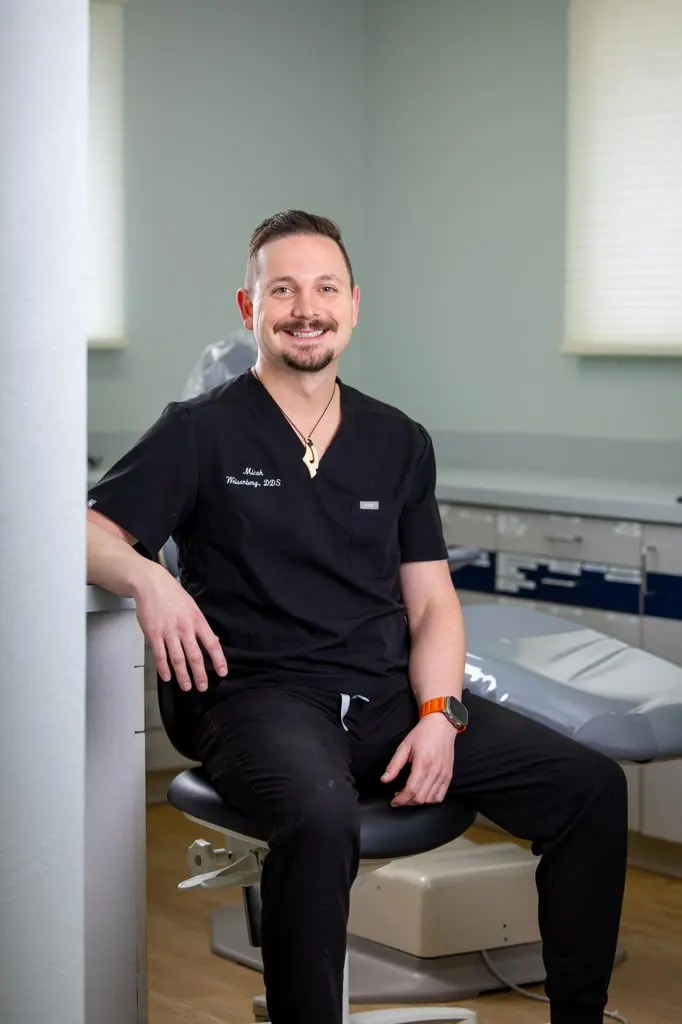
The clinician behind FPX
Dr. Micah Weisenberg built FPX for his own patients. Rather than keep the protocol inside one practice, he partnered with labs and educators to put it in other clinicians’ hands.
The aim is to make FP1 treatment routine for the patients who need it, rather than a showcase case you post to Instagram.
Methodology
Five biomechanical and biological principles, planned together so the restoration can adapt as bone and tissue change.
5–6 mmImplant platform apical to the planned gingival zenith
Wolff’s LawBone adapts to the load it carries
6 implantsThree under each hemi-arch segment
3DContoured mesial-distally and buccal-lingually
≥ 2 mmKeratinized mucosa band linked to lower peri-implantitis risk
Want the evidence? The full methodology covers the rationale, references, and limits behind each principle.
Read the full methodologyProducts & Services
FPX provides coordinated planning, guided surgical solutions, and restorative design for implant dentistry—from single units and implant bridges to complex FP1, FP2, and FP3 full-arch reconstruction.
FPX planning begins with the intended tooth position, esthetics, tissue architecture, and restorative requirements—then works backward to determine the implant, abutment, and surgical plan required to support that result.
Key Features
Custom surgical guide systems designed to transfer the FPX treatment plan accurately and efficiently to the clinical environment.
Key Features
Custom definitive restorations designed according to the esthetic, biologic, and mechanical requirements of each individual case.
Key Features
The same prosthetically driven planning philosophy extends beyond full-arch reconstruction.
Key Features
Abutment selection is treated as part of the biologic and restorative plan rather than an isolated prosthetic decision.
Key Features
Complex implant treatment rarely follows a perfectly linear pathway.
Key Features
More Than Components. A Coordinated Treatment System. FPX brings surgical planning, biologic architecture, guided execution, and restorative design into one connected workflow.
For more detailsContinuing Education
Choose a structured classroom and model-based experience, individualized live-surgery mentorship, or combine both for the most complete implementation pathway.
Classroom + Model-Based
A comprehensive three-day course offered several times each year, combining classroom education with hands-on model-based exercises.
What You'll Learn
One-on-One + Live Surgery
For clinicians who want direct case-based support, FPX offers individualized mentorship in the doctor's own practice using their own patient, team, and clinical environment.
Mentorship Format
Recommended
Complete the model-based course first, then reinforce the concepts through live mentorship on your own case.
This provides the strongest combination of understanding + application + repetition.
FPX Can Meet You Where You Are You do not have to complete the classroom course before scheduling mentorship.
For more detailsLab Technology
FPX pairs clinically driven planning with advanced digital design and manufacturing to carry the treatment plan through to the final restoration.
High-strength restorative materials and modern milling workflows are used to create full-arch prostheses, implant bridges, and single-unit restorations with a focus on esthetics, fit, durability, and long-term serviceability.
Key Features
Every restoration begins with the planned biology and prosthetic architecture—not simply with a scan.
Key Features
Each case is reviewed before delivery to verify that the restoration reflects the planned design and clinical requirements.
Key Features
One of the most important advantages of the FPX model is the feedback loop between the clinical team and the design/manufacturing team.
More Than a Lab. A Continuous Development Platform. FPX connects clinical planning, digital design, manufacturing, and real-world feedback in one continuous loop.
For more detailsUnderstanding FPX
FPX uses a deeper implant placement strategy that creates a biological safety buffer. This means your implants can adapt to changes in bone and tissue over time. You get the beautiful appearance of FP1 with the long-term reliability of FP3.
Didn’t find your question? Ask us directly and we’ll answer it for your case.
Contact usContact · FPX Smiles
Ask about FPX training, lab partnerships, or finding a provider. Send a message, or reach us directly.
Dr. Micah Weisenberg · Serving all of the United States